Unlocking the Potential of Blush Pink Minimal Plaid Pattern for Your Creative Projects
There is a distinct charm in simplicity, especially when it comes to design elements that need to work hard across various mediums. The Blush Pink Minimal Plaid Pattern has quickly become a favorite among creators who value subtlety over noise. This aesthetic combines the classic structure of plaid with a soft, modern color palette, making it versatile enough for high-end branding or cozy personal projects. However, simply downloading a file does not guarantee a professional result. Many enthusiasts and small business owners rush into using digital assets without fully understanding the technical nuances, often leading to frustrating outcomes in print or digital display.
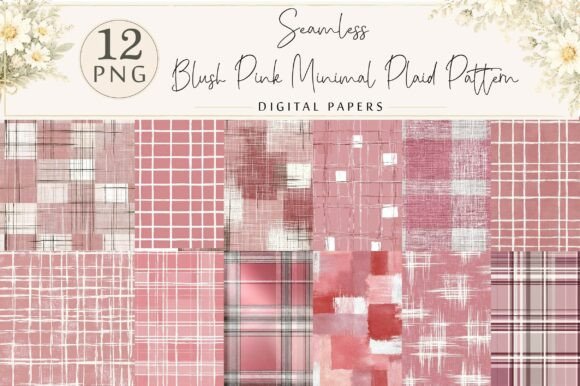
When you explore a collection like the one offering 12 unique designs with a solid color distressed effect, you are investing in more than just an image; you are investing in the quality of your final product. To ensure you get the most out of these assets, it is crucial to navigate common pitfalls regarding resolution, file usage, and color management. By addressing these areas proactively, you can elevate your work from amateur to polished professional.
Understanding the Asset Before You Begin
The appeal of this specific pattern lies in its "distressed effect." Unlike sharp, vector-based geometric lines, a distressed texture adds depth and a tactile feel, mimicking the look of worn fabric or vintage paper. This makes the Blush Pink Minimal Plaid Pattern ideal for scrapbooks, wall decor, and apparel where a sterile, perfect look might feel out of place. The collection typically includes 12 variations, giving you enough diversity to create a cohesive series without repetition becoming boring.
However, a frequent misunderstanding arises when users assume all PNG files behave the same way. These files come with a transparent background, which is a powerful feature but also a potential trap for the unprepared. If you place these patterns over a busy background without checking contrast, the subtle blush tones can disappear entirely. The minimal nature of the design means it relies on negative space to breathe. Always preview your pattern against your intended background color before committing to a large print run or finalizing a digital layout.
Common Mistakes That Compromise Quality
One of the most significant errors creators make involves ignoring the resolution specifications. The standard for high-quality printing is 300 DPI (dots per inch). The files in this collection are provided at 300 dpi and sized at 12×12 inches. While this sounds sufficient, problems occur when users try to upscale the image beyond its original dimensions. Stretching a raster image (like a PNG) larger than 12×12 inches will result in pixelation, blurring the delicate distressed lines and ruining the minimalist aesthetic.
Another oversight concerns the "digital instant download" nature of the product. Because no physical item is sent, buyers sometimes forget to check their local printer's requirements. Not all home printers handle 300 DPI files correctly if the software settings are defaulted to "web quality" or 72 DPI. This mismatch can lead to prints that look grainy or washed out, causing unnecessary waste of materials like sticker paper or t-shirt transfer vinyl.
Color variation is perhaps the most unavoidable yet misunderstood aspect of working with digital blush tones. Screens emit light, while printers use ink. A vibrant blush pink on your monitor may print as a dull mauve or an overly bright coral depending on your device calibration and the printer's color profile. Assuming the screen representation is absolute truth is a mistake that leads to dissatisfaction. Always request a test print or calibrate your monitor if color accuracy is critical for your brand identity.
Strategies for Flawless Implementation
To avoid the pitfalls mentioned above, adopt a workflow that prioritizes verification. Before resizing any element, check the image properties in your software. If you need a pattern larger than 12×12 inches, consider tiling the image seamlessly rather than stretching it. Most design software allows you to define a pattern swatch from the PNG, enabling you to cover large surfaces like wall murals or fabric bolts without losing resolution.
When preparing files for physical products such as T-shirts, stickers, or cards, always work in the color mode required by your printer. For home inkjet or laser printers, RGB is often standard, but professional offset printers usually require CMYK. Converting your file prematurely can shift the blush pink hue unexpectedly. Keep a master copy in the original format and only convert duplicates for specific output needs.
Furthermore, leverage the transparent background effectively. This feature allows you to layer the plaid over photos or solid colors without unsightly white boxes surrounding the design. However, ensure that the underlying layer provides enough contrast. If you are placing the light blush plaid over a white cardstock, the pattern may vanish. In such cases, add a subtle drop shadow or place the pattern on a slightly darker accent layer to make the distressed texture pop.
Maximizing Versatility Across Projects
The true value of having 12 different designs in one pack is the ability to maintain consistency while introducing variety. For entrepreneurs creating a product line, use one pattern for packaging, another for social media backgrounds, and a third for internal documentation. This creates a unified brand language without visual monotony.
- Scrapbooking: Use the distressed texture to evoke nostalgia. Layer the PNGs over journaling cards for a vintage feel.
- Wall Decor: Print on high-quality matte paper and frame for a soft, gender-neutral nursery or bedroom accent.
- Digital Marketing: Bloggers can use these as subtle watermarks or section dividers to add personality to website layouts without distracting from the text.
- Apparel: When printing on dark fabrics, remember that the translucent nature of some inks might require a white underbase layer to keep the blush pink visible.
It is also wise to organize your downloaded files immediately. Create folders labeled by usage intent (e.g., "Web," "Print," "Social Media") to prevent accidental use of the wrong version later. Since these are instant downloads, you have immediate access, but disorganization can lead to lost time searching for the correct 300 DPI file when a deadline approaches.
Making the Right Choice for Your Needs
Before finalizing your decision to use this pattern for a commercial project, review the licensing terms associated with the download. While many creators allow for broad commercial use, some may have restrictions on the number of physical items sold or require attribution. Ensuring you are compliant protects your business from legal issues down the road.
Ultimately, the Blush Pink Minimal Plaid Pattern is a tool that rewards attention to detail. By respecting the resolution limits, managing color expectations, and utilizing the transparent backgrounds strategically, you transform a simple digital file into a cornerstone of your creative portfolio. Whether you are a hobbyist making gifts or a professional launching a new clothing line, taking the time to understand the technical foundation of your assets ensures that the final result is as beautiful and intentional as the design itself.