Bringing the 90s Back to Life with Authentic Y2K Digital Paper
There is a specific kind of nostalgia that hits when you see a pixelated heart, a chunky computer icon, or a swirl of neon green against a stark black background. It reminds us of dial-up tones, frosted lip gloss, and the early days of the internet where everything felt new and slightly chaotic. For creators and small business owners today, tapping into this aesthetic isn't just about looking back; it's about creating something that feels fresh again. This is where 90s Retro Y2K Digital Paper comes into play. These aren't just random images; they are high-resolution tools designed to help you build brands, design products, and tell stories that resonate with a generation that grew up in the late nineties and early two thousands.
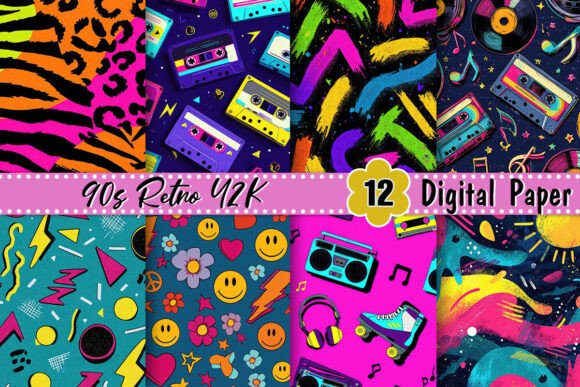
When we talk about this specific collection of 12 JPG digital images, we are discussing assets that bridge the gap between vintage charm and modern utility. The files are provided at 300 DPI, which is the gold standard for printing. This means whether you are making a physical sticker for a customer's laptop or designing a digital invitation for a themed party, the quality remains crisp. Because these images are non-seamless, they function as distinct elements or focal points rather than endless backgrounds. This distinction matters because it changes how you approach your design work. Instead of tiling a pattern endlessly, you are encouraged to place these graphics intentionally, letting them stand out as statement pieces within your layout.
Real-World Applications for Creators and Entrepreneurs
The versatility of retro digital paper extends far beyond simple scrapbooking. Consider the small business owner who runs an online shop selling handmade jewelry or vintage clothing. In a sea of minimalist, beige-toned branding, a splash of Y2K aesthetic can make a product listing pop. You might take one of these 12 JPG images and use it as a backdrop for your product photography on social media. Imagine a pair of silver hoop earrings placed over a digital paper featuring a grainy, cyber-green texture. Immediately, the image communicates a vibe before the customer even reads the description. It signals that your brand understands current trends and has a playful personality.
Freelance graphic designers often face the challenge of finding unique assets that don't look like generic stock photos. These retro papers offer a solution for clients looking to launch a podcast, a YouTube channel, or a music album with a throwback theme. Since the resolution is 300 DPI, you can scale these images down for web use without losing detail, or print them large for poster campaigns. A marketer could take one of the designs, overlay bold typography in a pixelated font, and create a flyer for a local club night or a university event. The non-seamless nature of the files allows you to frame text around the graphic, creating a balanced composition that feels curated rather than copied.
Educational and Personal Projects
Educators and workshop leaders can also find surprising value in these resources. If you are teaching a class on graphic design history, media studies, or even marketing trends, having tangible examples of Y2K aesthetics helps students visualize the era. You can incorporate these digital papers into presentation slides to break up text-heavy slides or use them as templates for student projects. For instance, ask students to design a mock advertisement for a fictional product from 1999 using these textures as their base. It turns a theoretical lesson into a hands-on creative exercise.
On a personal level, hobbyists who enjoy digital planning or journaling on tablets will appreciate the high resolution. Many people use apps like GoodNotes or Procreate to organize their lives, and adding a retro flair to their daily logs can make the process more enjoyable. You can import these JPGs, resize them to fit your page, and use them as decorative headers or dividers between sections. Because there are 12 distinct images in the set, you have enough variety to keep your planner looking consistent yet dynamic throughout the month. It's a small touch that adds personality to what might otherwise be a mundane task.
What to Consider Before You Start Designing
Before you download and start integrating these assets into your workflow, it is important to understand the technical specifics to ensure they meet your needs. The term "non-seamless" is crucial here. If you are looking for a texture to tile across a website background so that no edges are visible, these specific files might require some extra editing or a different approach. However, if your goal is to create collage-style art, packaging inserts, or social media posts where the image sits centrally or acts as a textured layer, the non-seamless quality is actually an advantage. It gives you defined borders to work with, preventing the "infinite loop" look that can sometimes feel impersonal.
Another factor to consider is the file format. These come as JPGs, which are universally compatible with almost every design software, from professional suites like Adobe Photoshop and Illustrator to free tools like Canva or GIMP. You don't need specialized knowledge to open them. However, because they are raster images (made of pixels) rather than vectors, you should avoid enlarging them beyond their intended print size. At 300 DPI, they are ready for standard print sizes, but blowing them up to billboard dimensions would result in pixelation. For most small business applications—like business cards, postcards, stickers, and flyers—the provided resolution is perfectly sufficient.
Licensing and usage rights are always a top priority for commercial users. When you acquire digital assets like this, ensure you understand how they can be used in end products. Typically, digital papers are meant to be incorporated into a larger design. You generally cannot resell the JPG files themselves as standalone items. Instead, you sell the t-shirt that has the design printed on it, or the digital planner that uses the image as a background element. This distinction protects the original creator while giving you the freedom to build profitable products. Always double-check the specific license terms associated with your purchase to avoid any legal hiccups down the road.
Making the Most of the Aesthetic
To truly leverage the power of 90s Retro Y2K Digital Paper, think about pairing it with complementary design elements. The Y2K era was defined by a mix of futuristic optimism and grunge textures. Try combining these digital papers with fonts that mimic old computer terminals, bubble letters, or jagged, hand-drawn styles. Color palettes should reflect the time period as well: think electric blues, hot pinks, slime greens, and metallic silvers. When these elements come together, they create a cohesive visual language that speaks directly to your audience.
Furthermore, consider the emotional connection these images evoke. For many adults aged 20 to 50, this style represents a time of transition and technological wonder. Using these textures in your branding can evoke feelings of comfort and fun. It tells your audience that you don't take yourself too seriously and that you value creativity. Whether you are a blogger writing about pop culture, a teacher creating engaging materials, or an entrepreneur launching a new line of stationery, these 12 images provide a solid foundation. They save you the time of creating complex textures from scratch, allowing you to focus on the message and the product itself.
In a digital world that often feels overly polished and sterile, there is something refreshing about the raw, eclectic energy of the late 90s. By integrating these high-quality digital papers into your projects, you are not just decorating a page; you are invoking a mood. You are inviting your audience to step back into a time when the internet was a playground and design rules were meant to be broken. With the right approach and an understanding of how to apply these non-seamless, high-resolution files, you can create work that stands out, resonates emotionally, and looks undeniably cool.