Reviving Heritage: The Art and Application of Mediterranean Tile Damask Blue Floral Patterns
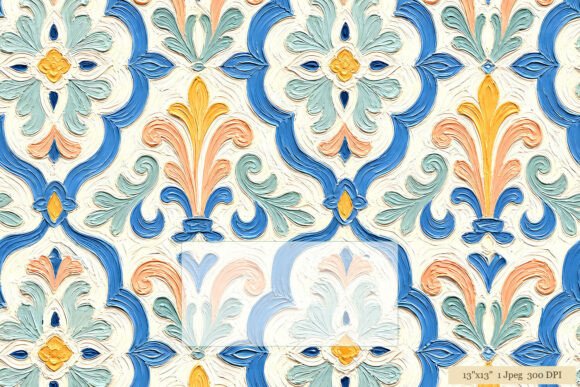
The intersection of historical craftsmanship and modern digital design creates a unique space where tradition meets innovation. At the heart of this convergence lies the Mediterranean Tile Damask Blue Floral, a pattern that encapsulates centuries of artistic evolution from the sun-drenched coasts of Southern Europe to the vibrant riads of North Africa. This specific design language is not merely a repetition of shapes; it is a narrative woven through cobalt blue scrollwork, blush acanthus leaves, and golden flower centres set against a creamy ivory ground. Understanding the depth of this aesthetic requires looking beyond the surface to appreciate the cultural synthesis of Portuguese azulejo and Italian majolica traditions that define its character.
The Architectural DNA of the Pattern
To truly leverage this design in professional or creative projects, one must first deconstruct its architectural components. The foundation of the Mediterranean Tile Damask Blue Floral is the symmetrical ogee damask grid. Unlike simple geometric repeats, the ogee curve introduces a fluid, S-shaped rhythm that guides the eye naturally across the surface. Within this framework, the pattern anchors itself with a warm goldenrod diamond and rosette at the centre of each repeat unit. This central motif acts as a visual fulcrum, providing stability amidst the ornate chaos of the surrounding elements.
Framing these central anchors is bold cobalt blue outline work. This is not a passive border; it defines the classic tile silhouette with authority, mimicking the hand-painted precision found in historic ceramic workshops. The use of saturated navy and cobalt provides the necessary structural strength, preventing the softer elements from becoming visually lost. Contrasting this rigidity are the secondary botanical elements: sage green, dusty rose blush, and muted teal leaves that fan outward in alternating directions. These colors are chosen deliberately to evoke a "jewel-box" composition, where every hue plays a specific role in creating depth and dimension.
The Impasto Texture: Simulating Tactility in Digital Media
What sets this particular iteration of Mediterranean design apart is its textural fidelity. Traditional tiles are defined by the glaze and the clay body, but this pattern introduces a painterly impasto texture. This technique simulates the thick application of oil paint or the rugged strokes of a palette knife. In a digital context, achieving this look requires careful attention to lighting and shadow within the design file. The texture suggests that the cobalt scrolls and acanthus fans are raised slightly above the creamy off-white background, enhancing the handcrafted, sun-bleached aesthetic.
For designers working in software like Procreate or Photoshop, replicating this effect involves layering brush strokes that mimic physical media. The goal is to avoid the sterile perfection of vector graphics in favor of an artisanal imperfection. The "thick oil paint" quality adds a sense of age and authenticity, making the pattern feel as though it has been weathered by the coastal breeze rather than generated by an algorithm. This tactile quality is crucial for applications where the viewer needs to feel a connection to the material, even through a screen.
Diverse Applications in Home Décor and Textiles
The versatility of the Mediterranean Tile Damask Blue Floral allows it to transcend traditional ceramic boundaries and thrive in soft goods and interior finishes. In the realm of home décor fabric, this pattern excels due to its rhythmic composition. When printed on heavy-weight upholstery fabrics, the bold cobalt outlines provide definition that holds up well in high-traffic areas, while the blush and sage tones introduce a softness that invites touch. Imagine an accent chair in a modern living room; the damask grid provides the structure needed for a formal piece, while the impasto texture adds a contemporary, artistic flair.
Wallpaper applications benefit significantly from the scale of the ogee grid. Large-format prints allow the four-petalled rosette medallions and baroque scrolls to breathe, creating an immersive environment reminiscent of a Moroccan riad or a European heritage villa. The creamy ivory ground serves a functional purpose here as well; it reflects light, preventing the rich blues and golds from overwhelming a smaller space. For curtain drapery, the alternating direction of the leaf fans creates a sense of movement, as if the fabric itself is swaying in a sea breeze.
Empowering Print-on-Demand and Digital Creators
The rise of Print-on-Demand (POD) business models has democratized access to high-quality, niche designs, and the Mediterranean Tile Damask Blue Floral is perfectly positioned for this market. Its complex color story and textural details make it an ideal candidate for products that require a premium feel. Ideal for POD products including tote bags, throw pillows, shower curtains, and duvet covers, the pattern offers a distinct alternative to generic geometric prints.
For creators utilizing platforms like Canva or selling digital assets, this pattern serves as a robust background or overlay. The "ceramic-effect sublimation" capability means the design can be transferred onto hard surfaces like mugs, coasters, and tiles with high fidelity. The key to success in these applications is ensuring the resolution captures the nuance of the impasto strokes. A low-resolution print would flatten the texture, losing the very quality that makes the design unique. Therefore, source files must be optimized for high-DPI output to maintain the illusion of thick paint and glazed ceramic.
Scrapbooking paper and gift wrap are additional avenues where this design shines. The jewel-box composition creates a luxurious unboxing experience, elevating a simple gift into a curated presentation. For scrapbookers, the blend of vintage charm and bold structure provides a perfect backdrop for travel journals, particularly those documenting trips to the Mediterranean region. The pattern acts as a visual anchor, grounding photos and memorabilia in a cohesive thematic narrative.
Cultural Synthesis and Historical Context
Understanding the origins of the design elements enhances the appreciation and appropriate usage of the pattern. The Mediterranean Tile Damask Blue Floral is a hybrid of two major ceramic traditions: Portuguese azulejo and Italian majolica. Azulejos are known for their tin-glazed ceramic tilework, often featuring intricate geometric and floral patterns in blue and white, introduced to the Iberian Peninsula by the Moors. Majolica, originating in Italy, is celebrated for its vibrant colors and detailed pictorial scenes. By combining the structural discipline of azulejo with the colorful exuberance of majolica, this pattern creates a globally inspired aesthetic that feels both familiar and novel.
The inclusion of acanthus leaves is a direct nod to Classical architecture, where the leaf was a staple of the Corinthian order. In this context, however, the acanthus is stylized with a "blush" tone, softening its classical rigidity. Similarly, the baroque scrolls reflect a period of artistic history characterized by drama and motion, yet they are contained within the orderly damask grid. This tension between freedom and structure is what gives the pattern its elegant mood. It evokes the feeling of coastal villas where nature and architecture exist in harmony, blurred by the heat of the sun and the proximity of the sea.
Implementation Strategies for Professionals
For architects, interior designers, and product developers, implementing this pattern requires a strategic approach to color balancing. The strength of the saturated cobalt and navy blue provides the skeleton of the design, but the warmth comes from the peach blush, sage, soft teal, and amber gold accents. When scaling the pattern for large installations, such as a feature wall in a hotel lobby or a restaurant, it is essential to test the color balance under different lighting conditions. Artificial lighting can sometimes wash out the subtle variations in the impasto texture or shift the hue of the dusty rose elements.
In digital mockups, the "sun-bleached" quality of the creamy off-white background should be preserved to maintain the vintage charm. Over-saturating the background can make the design look too digital and lose its artisanal appeal. Designers should consider using blending modes in Photoshop to simulate the way light interacts with the textured surface, adding subtle highlights to the raised portions of the scrolls and shadows to the recessed areas of the ivory ground. This attention to detail reinforces the E-E-A-T (Experience, Expertise, Authoritativeness, and Trustworthiness) of the final product, signaling to the consumer that the design is rooted in genuine artistic understanding.
The Enduring Appeal of Artisanal Aesthetics
In an era of mass production and minimalist trends, there is a growing hunger for designs that tell a story and exhibit human touch. The Mediterranean Tile Damask Blue Floral satisfies this desire by offering a richly layered surface pattern that feels collected over time rather than manufactured overnight. Its ability to adapt to various mediums—from the rigidity of ceramic tiles to the fluidity of silk fabrics—demonstrates its robustness as a design concept.
Whether used in a high-end hospitality project to evoke the grandeur of a European estate or in a small-scale craft project to add a touch of global elegance, the pattern delivers impact. The rhythmic interplay of the ogee grid, the tactile suggestion of oil paint, and the harmonious color palette create a visual experience that is both soothing and stimulating. As consumers become more discerning about the origins and quality of the items they purchase, designs that honor historical traditions while embracing modern textural techniques will continue to hold significant value. This pattern stands as a testament to the enduring power of Mediterranean artistry, proving that heritage designs can remain relevant and exciting in the contemporary landscape.