Evaluating Colorful Summer Digital Paper for High-Resolution Creative Projects
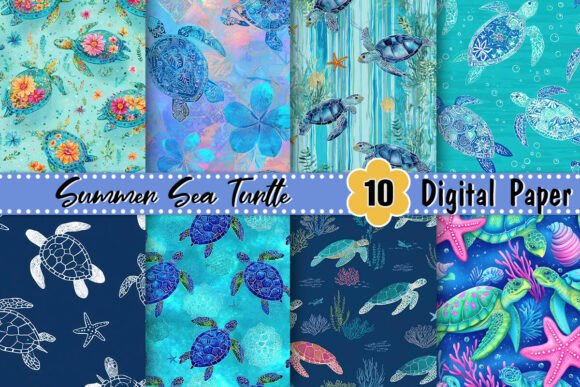
When curating assets for seasonal design projects, the distinction between seamless patterns and standalone textured sheets often dictates the workflow efficiency and final aesthetic. Colorful Summer Digital Paper represents a specific category of digital resources designed to evoke the vibrancy of the season through high-resolution, non-seamless imagery. Unlike tileable backgrounds intended for web interfaces or large-scale wrapping, these files are typically crafted as distinct compositions, offering unique arrangements of light, shadow, and color in each frame. Understanding the specific attributes of this format—particularly the 300 DPI resolution and JPG file type—is essential for designers, scrapbookers, and content creators who need to determine if this resource aligns with their current production needs.
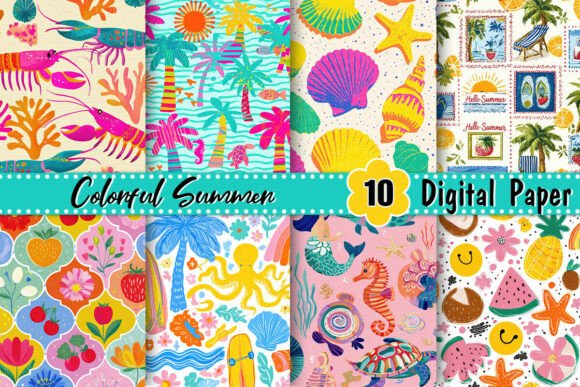
The core value proposition of this collection lies in its fidelity and visual density. A resolution of 300 DPI (dots per inch) is the industry standard for professional printing, ensuring that when these images are rendered on physical media, such as cardstock or photo paper, the details remain crisp without pixelation. This makes the asset particularly suitable for tangible outputs like greeting cards, invitations, or printed planners. However, the "non-seamless" nature of the files introduces a critical decision factor for buyers. While seamless patterns allow for infinite tiling across a canvas, non-seamless papers function more like individual photographs or painted canvases. Each of the 10 JPG images in this set likely features a specific focal point, gradient, or texture distribution that does not repeat perfectly at the edges.
Distinguishing Non-Seamless Assets from Tileable Patterns
To make an informed purchasing decision, it is necessary to compare non-seamless digital papers against their seamless counterparts. Seamless patterns are ideal for background fills in web design, fabric printing, or covering large areas in digital layouts where repetition is invisible to the eye. They are engineered so that the left edge matches the right, and the top matches the bottom. In contrast, Colorful Summer Digital Paper in a non-seamless format offers a different kind of utility. These images are best utilized as base layers, mats for photos, or distinct design elements where the composition itself adds value.
For example, if you are designing a digital invitation where the background needs to fade into white at the edges, a seamless pattern might create a distracting grid effect if not masked correctly. A non-seamless summer paper, however, might feature a natural vignette or a watercolor wash that naturally frames the central content. The trade-off here is flexibility versus uniqueness. With seamless tiles, you have unlimited coverage but potentially repetitive visuals. With a set of 10 high-resolution non-seamless images, you gain variety and artistic composition but lose the ability to tile them indefinitely without visible seams. For projects requiring only a few distinct pages or screens, the latter often provides a more premium, curated look.
Technical Considerations: JPG Format and Resolution Limits
The choice of file format significantly impacts how these assets can be manipulated. This collection utilizes the JPG format, which is universally compatible and offers a good balance between file size and image quality for photographic textures. However, JPG is a "lossy" compression format, meaning it does not support transparency (alpha channels). This is a crucial limitation to consider during the evaluation process. If your workflow requires overlaying these summer textures onto other elements with complex blending modes while maintaining transparent backgrounds, you would need to perform additional masking in software like Photoshop or GIMP.
Furthermore, while 300 DPI is excellent for print, the physical dimensions of the image matter just as much as the resolution rating. A small image saved at 300 DPI will still appear blurry if enlarged beyond its native pixel dimensions. When reviewing product specifications for Colorful Summer Digital Paper, always check the pixel width and height (e.g., 3000x3000 pixels) rather than relying solely on the DPI claim. For standard letter-size prints (8.5x11 inches), you generally need an image that is at least 2550 pixels wide. Most professional digital paper sets meet this criteria, but verifying the exact dimensions ensures the asset fits your specific output requirements, whether that is a large poster or a small sticker sheet.
Practical Applications and Best-Fit Scenarios
Identifying the right use case is the most effective way to evaluate whether this resource is a necessary addition to your library. The vibrant hues associated with summer themes—often including coral, turquoise, sunshine yellow, and lush greens—are versatile but context-dependent. Here are several scenarios where non-seamless, high-res summer papers excel:
- Hybrid Scrapbooking: This technique combines digital design with physical printing. The 300 DPI resolution allows users to print the digital papers at home or via a professional service, then cut and assemble them physically. The non-seamless nature works well here, as each page of a scrapbook layout benefits from a unique background rather than a repeating pattern.
- Social Media Graphics: For Instagram posts or Pinterest pins, a single high-quality image serves as a perfect backdrop for text overlays. The rich colors of summer themes can increase engagement by evoking positive seasonal associations. Since social media displays are screen-based, the 300 DPI source file ensures downscaling results in a sharp, clean image.
- Printable Planners and Journals: Designers creating PDF planners often need distinct backgrounds for monthly spreads. Using a set of 10 varied images allows for a cohesive yet non-repetitive theme throughout a quarter or season, enhancing the user experience for those who print and bind their own organizers.
- Product Mockups: When showcasing summer-themed products like sunglasses, beach towels, or beverages, placing the item against a textured, colorful digital paper can create a lifestyle feel without the need for an expensive photoshoot.
Limitations and When to Seek Alternatives
Despite their versatility, there are situations where Colorful Summer Digital Paper in this specific format may not be the optimal choice. If your project involves creating a website background that must adapt to various screen sizes without showing hard edges, a vector-based solution or a CSS-generated gradient might be more efficient. Similarly, if you require extensive color manipulation, the JPG format's lack of layers can be restrictive. While you can adjust hue and saturation, you cannot easily isolate specific elements within the texture if the original file was flattened.
Additionally, users working exclusively in vector-based environments like Adobe Illustrator might find raster images (JPGs) less flexible than vector patterns, especially if scaling to massive formats like billboards is a possibility. In such cases, looking for SVG or EPS alternatives would be prudent. It is also worth noting that "summer" themes can sometimes lean towards cliché if not selected carefully. When evaluating the 10 images in the set, consider whether the color palette is broad enough to transition into early autumn or late spring, thereby extending the usable lifespan of the asset beyond a single season.
Making the Final Decision
Selecting the right digital resources ultimately depends on the intersection of your technical requirements and creative vision. Colorful Summer Digital Paper offering 10 non-seamless JPGs at 300 DPI is a robust choice for professionals and hobbyists focused on print-ready materials, hybrid crafting, and static digital graphics. The high resolution guarantees quality output, while the non-seamless design encourages thoughtful composition over repetitive filling.
Before finalizing a download or purchase, ask yourself three key questions: Do I need transparency? Will I be tiling this image across a large area? Do I need to edit individual layers within the texture? If the answer to any of these is "yes," you may need to supplement this collection with PNGs, seamless tiles, or layered PSD files. However, if your goal is to quickly deploy beautiful, high-fidelity backgrounds for cards, social posts, or printed layouts, this type of asset provides an efficient, high-quality foundation. By understanding the trade-offs between format, resolution, and seamlessness, you can integrate these summer visuals into your workflow with confidence, ensuring they enhance rather than complicate your design process.