Evaluating the Pink Peony Rose Floral Pattern for Textile and Digital Design Projects
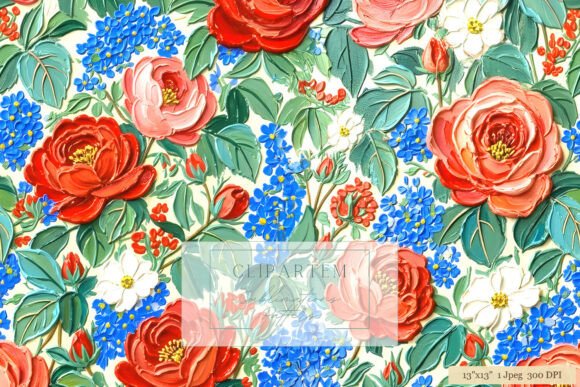
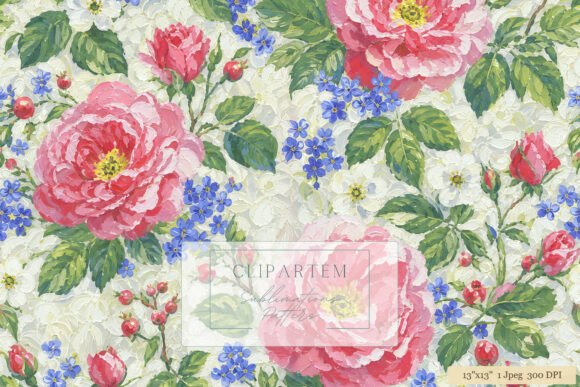
The Pink Peony Rose Floral Pattern represents a specific intersection of botanical accuracy and artistic interpretation, characterized by lush, painted pink peonies and roses blooming across a creamy textured background. This design is not merely a repetition of flowers; it is a curated composition that leans heavily into the romantic, cottage-core aesthetic while maintaining the structural integrity required for professional sublimation and surface pattern design. For designers, crafters, and product developers aged 20 to 50 who are evaluating resources for fabric yardage, apparel, or digital assets, understanding the nuances of this pattern is essential. It distinguishes itself through an oil-painting or impasto style, where visible brushstroke texture adds depth that flat vector graphics often lack.
At its core, this pattern features oversized deep-pink peony and cabbage rose blooms as the dominant motifs. These are not stylized simplifications but rich, detailed renderings that evoke the feeling of an English cottage garden. Flanking these large florals are clusters of delicate periwinkle blue forget-me-nots, small white blossoms with yellow centres, deep green pointed rose leaves, and scattered crimson rose hips and buds. The result is a full, garden-abundant composition that avoids the emptiness sometimes found in minimalist trends. The background reads as a soft warm cream with subtle painterly strokes, providing an antique ivory ground that unifies the diverse color story without competing for attention.
Artistic Execution and Texture Differences
When comparing the Pink Peony Rose Floral Pattern to other floral options available on platforms like Spoonflower or in stock libraries, the primary differentiator is the execution style. Many contemporary floral patterns utilize flat design or clean vector lines, which offer scalability and crispness at any size. However, this specific pattern employs a high-detail, painterly execution. The visible brushstrokes create a tactile quality that mimics traditional oil painting. This "impasto" effect introduces a layer of visual complexity that can make digital prints feel more organic and handcrafted.
This textural approach has distinct implications for usage. In contexts where high-resolution detail is paramount, such as large-scale throw pillow covers or wall murals, the brushwork adds a sophisticated, heirloom quality. Conversely, when scaling down for smaller applications like phone cases or journaling backgrounds, the intricate details must be managed carefully to ensure the brushstrokes do not resolve into visual noise. Designers must evaluate whether the target medium supports this level of granularity. For instance, sublimation on polyester blends tends to capture these gradients and textures beautifully, whereas low-thread-count cotton might absorb the ink in a way that softens the intended sharpness of the brushstrokes.
Color Dynamics and Atmospheric Impact
The color story of this pattern is another critical factor in decision-making. Centering on hot pink and dusty rose for the large blooms, the design creates a vibrant focal point that is immediately eye-catching. These warm tones are balanced by vivid cobalt and periwinkle blue accent flowers, which provide a cool counterpoint that prevents the design from becoming overly saccharine. The foliage, rendered in forest and sage greens, grounds the composition, while bright red-crimson berries and buds add sporadic pops of high-contrast energy.
Compared to monochromatic floral schemes or pastel-only palettes, this multi-hued approach offers greater versatility in styling but requires more thoughtful coordination with solid colors. The antique ivory background serves as a neutral buffer, allowing the saturated hues to stand out without clashing. This makes the pattern particularly suitable for grandmillennial aesthetics, where bold prints are layered with solids and stripes. However, for projects requiring a subdued or muted tone, the vibrancy of the cobalt and hot pink may be too dominant. In such cases, designers might consider adjusting the saturation levels digitally or pairing the fabric with very neutral trims and linings to let the pattern breathe.
Application Suitability: Fabric vs. Digital Media
Determining the best fit for the Pink Peony Rose Floral Pattern involves analyzing the end product. The seamless nature of the surface pattern makes it exceptionally versatile, yet different applications yield different results.
- Fabric Yardage and Apparel: For clothing, particularly dresses, blouses, or skirts, the oversized nature of the peonies creates a dramatic statement. The flow of the fabric interacts with the painterly strokes, enhancing the romantic mood. However, pattern matching at seams can be challenging due to the large scale of the motifs. This pattern is less ideal for small accessories where the full bloom cannot be appreciated, unless a scaled-down version is utilized.
- Home Decor: In home furnishings like tote bags and throw pillow covers, the durability of the print is key. The rich colors and textured look hold up well in interior settings, evoking a vintage-botanical feel that complements wooden furniture and natural fibers. The cream background helps hide minor wear better than stark white designs.
- Digital Assets: For digital wallpaper, phone cases, and Canva templates, the resolution of the source file is paramount. The high-detail execution ensures that the pattern remains crisp on retina displays. As a Procreate pattern fill or Photoshop resource, it offers artists a ready-made texture that can be overlaid with text or other elements, though the busy nature of the background may require opacity adjustments to maintain legibility of foreground content.
Tradeoffs and Limitations to Consider
While the Pink Peony Rose Floral Pattern offers significant aesthetic benefits, it is not a universal solution for every design challenge. One notable limitation is its specific stylistic niche. The strong association with cottage-core and vintage-botanical themes means it may feel out of place in modern, industrial, or ultra-minimalist design contexts. Users seeking a sleek, contemporary look might find the impasto texture and abundant floral density too traditional or ornate.
Furthermore, the complexity of the design presents a tradeoff regarding readability. When used as a background for text-heavy documents, scrapbooking sheets, or website headers, the varied colors and dense composition can compete with typography. In these scenarios, it is often necessary to use the pattern as an accent rather than a full-field background, or to apply a semi-transparent overlay to mute the details. Additionally, the specific color palette, while vibrant, may not align with all brand guidelines or seasonal trends that favor earth tones or neon accents.
Making an Informed Selection
Choosing this pattern over alternatives comes down to the desired emotional resonance and the technical requirements of the project. If the goal is to evoke nostalgia, romance, and a sense of handcrafted luxury, the Pink Peony Rose Floral Pattern is a superior choice compared to flatter, more generic floral repeats. Its strength lies in its ability to tell a story through visual texture and color depth.
However, if the priority is maximum versatility across vastly different styles, or if the production method limits color fidelity (such as certain types of screen printing with limited color separations), a simpler, two-tone floral pattern might be a more pragmatic alternative. Similarly, for small-scale digital icons or favicons, the detail in this pattern would be lost, necessitating a simplified iconographic approach.
Ultimately, the decision rests on balancing the artistic vision with practical constraints. For creators working within the sphere of heirloom textiles, romantic apparel, or detailed digital stationery, this pattern provides a robust foundation. Its blend of deep-pink dominance, periwinkle accents, and creamy warmth offers a cohesive package that reduces the need for additional graphic manipulation. By understanding where this pattern excels and where it faces limitations, designers can deploy it effectively to enhance their projects without compromising on quality or aesthetic intent.