Integrating the Lemon Drop Seamless Repeat Pattern into Professional Surface Design Workflows
In the realm of surface pattern design and decorative arts, the transition from a standalone illustration to a functional, repeatable asset is often the most critical phase of a project. The Lemon Drop Seamless Repeat Pattern exemplifies this transition, offering a vibrant hand-drawn botanical motif that balances playful naturalism with the structural rigidity required for commercial application. For professionals ranging from textile designers to brand managers, understanding how to integrate such an asset into a broader workflow is essential for maximizing its utility across various mediums.
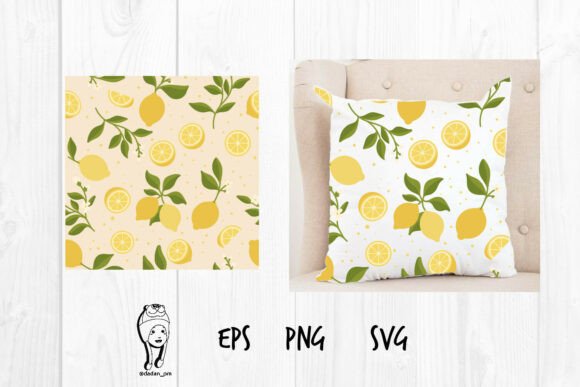
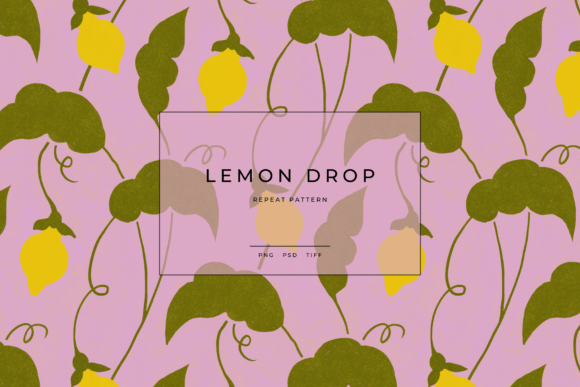
This specific design features stylized lemon fruits intertwined with flowing vine structures and organic leaf forms, all set against a soft gradient background. While the aesthetic appeal is immediate, its true value lies in its technical construction. Designed with a contemporary decorative feel, the pattern utilizes a half drop repeat. Unlike a standard block repeat where elements align directly above and below one another, a half drop arrangement staggers the motifs. This creates a dynamic rhythm that guides the eye diagonally across the surface, effectively masking the mechanical nature of repetition. For large-scale applications like wallpaper or upholstery, this staggered flow prevents the "grid effect" that can make patterns look cheap or digitally generated.
Strategic Placement in the Creative Process
Integrating the Lemon Drop Seamless Repeat Pattern into a project requires viewing it not just as a final image, but as a flexible component within a larger production pipeline. Depending on the nature of your work, this asset can be deployed at different stages of development.
During the Conceptual Phase: For interior designers and architects, this pattern serves as a powerful visualization tool early in the client presentation stage. Because the color palette is intentionally flexible, you can rapidly adapt the hues to match a specific mood board or brand identity before committing to physical samples. The ability to recolor layers allows for A/B testing of different colorways—perhaps a cool, muted sage and lemon for a Scandinavian-inspired space, or a high-contrast yellow and navy for a bold retail environment. This agility speeds up the decision-making process and reduces the turnaround time between concept approval and procurement.
In the Production Phase: For manufacturers and printers, the technical specifications of the file are paramount. The inclusion of high-resolution formats such as TIFF and PSD ensures that the hand-drawn details remain crisp when scaled up for wide-format printing. The separation of elements into editable color layers is a significant workflow accelerator. It eliminates the need for manual masking or complex selection processes when adjusting colors for different fabric dyes or ink limitations. This compatibility with standard industry software streamlines the pre-press process, reducing the risk of errors and ensuring color consistency across batches.
Post-Launch and Scaling: Once a product featuring this pattern is launched, the asset's versatility supports brand expansion. A packaging designer might use the same lemon vine motif for a limited-edition citrus tea box, while a digital marketer utilizes the PNG version for social media backgrounds. Maintaining this visual consistency across touchpoints strengthens brand recognition. The seamless nature of the repeat means the pattern can be tiled infinitely without visible seams, making it ideal for both physical goods and digital interfaces.
Technical Compatibility and File Management
Successful implementation relies heavily on organization and file compatibility. The Lemon Drop Seamless Repeat Pattern is delivered in multiple formats to accommodate diverse workflows: TIFF (.tif), PSD (.psd), and PNG (.png). Understanding when to use each format is key to maintaining quality and efficiency.
- PSD (Photoshop Document): This is the master file for any customization. Because the color layers are separated, this format is essential for designers who need to shift hues, adjust saturation, or isolate specific elements like the lemon fruit or the vine structure. It preserves the editability of the hand-drawn illustration style.
- TIFF (Tagged Image File Format): Ideal for final output in printing processes. TIFFs support high bit-depth and lossless compression, ensuring that the soft gradient background and fine line work of the botanical elements render perfectly on textiles and wallpaper. Use this format when sending files to professional print houses.
- PNG (Portable Network Graphics): Best for digital applications where transparency or web optimization is required. If you are creating mockups for e-commerce sites or digital presentations, the PNG format offers a balance of quality and file size efficiency.
Proper file naming conventions and folder structures are also vital when managing variations of this pattern. As you create different colorways for different clients or seasons, clearly labeling files by date, color profile, and intended medium (e.g., LemonDrop_Wallpaper_Sage_v02.tif) prevents confusion and ensures that the correct asset is pulled for production.
Application-Specific Considerations
The utility of the Lemon Drop Seamless Repeat Pattern extends across several industries, each with unique requirements for scale, texture, and durability.
Textile and Home Décor: When applying this pattern to fabrics for bedding or upholstery, the half drop repeat is particularly advantageous. It helps disguise pattern matching issues at seams, which is common in furniture manufacturing. The organic leaf forms and flowing vines add a sense of movement that complements the drape of fabric. However, designers must consider the scale of the repeat relative to the end product. A large-scale repeat works beautifully on a statement sofa or floor-length curtains but might overwhelm a small throw pillow. In such cases, the editable nature of the source file allows for scaling adjustments while maintaining the integrity of the vector-like hand-drawn lines.
Packaging and Stationery: For product packaging, the vibrant citrus print acts as an immediate visual cue for flavor or freshness. The stylized lemon fruits provide a recognizable iconography that works well even when scaled down for labels or tags. The soft gradient background adds a premium feel, distinguishing the product from competitors using flat, solid colors. When preparing files for packaging die-lines, ensure the pattern tiles correctly around corners and folds; the seamless nature of the design facilitates this, but careful alignment during the layout phase is still necessary.
Digital Backgrounds and Branding: In digital contexts, the pattern can serve as a subtle texture behind website headers or email newsletters. The key here is opacity and contrast. By lowering the opacity of the pattern layer in a design program, you can create a watermark effect that adds depth without distracting from foreground content. The clean lines of the botanical illustration ensure it remains legible even at lower resolutions.
Optimizing Workflow Efficiency
To fully leverage the potential of this asset, integrate it into a standardized review and approval workflow. Begin by importing the PSD file into your design environment and immediately duplicating the base layer. This preserves the original state should you need to revert changes. Utilize adjustment layers for color shifts rather than altering the pixel data directly; this non-destructive approach allows for rapid iteration based on stakeholder feedback.
Quality control is another crucial step. Before finalizing any print run, generate a physical proof or a high-fidelity digital mockup. Check specifically for banding in the gradient background and clarity in the fine details of the vine structures. The hand-drawn aesthetic should retain its organic imperfections, which give the pattern character, but these should not be mistaken for printing artifacts. Ensuring that the half drop repeat aligns perfectly at the edges of your canvas is also mandatory to avoid visible breaks in the pattern when tiled.
Furthermore, consider the longevity of the design. Trends in botanical prints evolve, but the core structure of the Lemon Drop Seamless Repeat Pattern is timeless enough to endure seasonal shifts. By keeping the master files organized and accessible, you can easily revisit the design years later to create updated colorways that align with new market trends, extending the lifecycle of the original creative investment.
Ultimately, the value of the Lemon Drop Seamless Repeat Pattern lies in its adaptability. Whether you are a freelancer looking to expand your portfolio with high-quality surface designs, a small business owner launching a new home décor line, or a corporate marketer refreshing a brand's visual identity, this asset provides a robust foundation. Its combination of artistic charm and technical precision allows it to fit seamlessly into rigorous professional workflows, delivering consistent, high-quality results across every application.