The Enduring Allure of the Vintage Art Nouveau Lotus Pattern in Modern Design
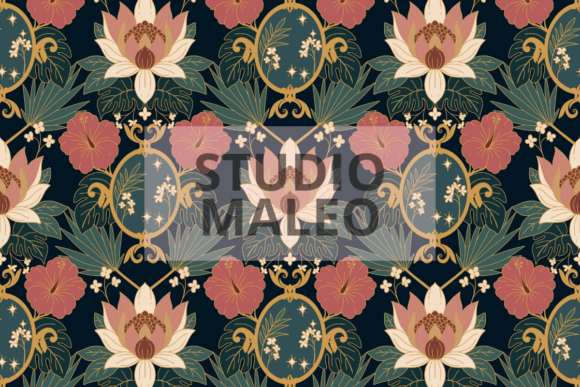
In an era dominated by minimalist interfaces and flat design aesthetics, there is a growing counter-movement toward richness, depth, and historical resonance. Designers, creators, and business owners are increasingly seeking visual languages that convey luxury, storytelling, and emotional weight. At the forefront of this shift is the Vintage Art Nouveau Lotus Pattern, a motif that bridges the gap between late 19th-century elegance and contemporary digital utility. This specific aesthetic, often characterized by flowing organic lines and stylized botanical forms, has found new life through high-quality dark tropical seamless patterns featuring vintage art nouveau lotus flowers, retro hibiscus, and gold star mirrors.
The relevance of this style extends far beyond mere nostalgia. It represents a tangible response to changing consumer habits and market preferences. As digital spaces become saturated with uniform content, brands and individuals are looking for ways to differentiate themselves. The moody botanical digital paper derived from these patterns offers a solution. It provides a sophisticated backdrop that commands attention without shouting, making it perfect for fabric sublimation, elegant textile print, luxury wallpaper, and scrapbooking. Understanding why this trend is gaining traction requires looking at how modern workflows and creative practices are evolving to value authenticity and tactile quality, even in digital formats.
The Evolution of Botanical Motifs in Digital Workflows
The journey of the lotus flower in design history is long, but its current iteration as a Vintage Art Nouveau Lotus Pattern is distinct. Historically, Art Nouveau was a reaction against the industrialization of the Victorian era, emphasizing hand-crafted beauty and natural forms. Today, we see a parallel reaction against the sterility of mass-produced digital assets. Creators are no longer satisfied with generic, low-resolution clips; they demand high-fidelity resources that retain the intricate details of the original artistic movements.
This evolution is driven by advancements in technology that allow for greater precision in reproduction. The modern dark tropical seamless pattern is not just a scan of an old painting; it is a meticulously engineered digital asset. These files are optimized for high-resolution outputs, ensuring that the delicate curves of the lotus and the shimmer of gold star mirrors remain crisp whether printed on a large-scale wall mural or a small piece of jewelry packaging. This technological capability has expanded the utility of these patterns, allowing them to fit seamlessly into modern production pipelines ranging from print-on-demand services to custom textile manufacturing.
Furthermore, the integration of retro elements like the hibiscus alongside the lotus creates a hybrid aesthetic that feels both familiar and fresh. This blending of motifs caters to a diverse audience that appreciates historical accuracy but desires a unique twist. For entrepreneurs and marketers, this means having access to visuals that can tell a more complex brand story—one that honors tradition while embracing modern versatility.
Practical Applications Across Industries
The versatility of the Vintage Art Nouveau Lotus Pattern makes it a valuable asset across various sectors. Its application is not limited to traditional decor; it has permeated fashion, digital media, and personal crafting.
- Fabric Sublimation and Textile Print: The dark, moody background of these patterns provides an excellent canvas for sublimation printing. Unlike light fabrics that can appear washed out, deep charcoal or midnight blue bases allow the gold accents and vibrant floral details to pop with intensity. Fashion designers are utilizing these textiles for evening wear, scarves, and limited-edition streetwear, tapping into the "dark academia" and "maximalist" fashion trends.
- Luxury Wallpaper and Interior Design: In interior design, there is a marked shift toward creating immersive environments. A seamless pattern featuring lotus flowers and gold mirrors can transform a standard room into a sanctuary. The reflective quality suggested by the gold elements adds a layer of perceived space and light, which is particularly effective in smaller urban apartments where creating a sense of luxury is paramount.
- Scrapbooking and Personal Archiving: The resurgence of analog hobbies has brought scrapbooking back into the spotlight. Enthusiasts are moving away from bright, primary colors toward more sophisticated palettes. These digital papers offer the perfect foundation for memory keeping, allowing users to create pages that feel like curated museum exhibits rather than simple photo albums.
- Digital Marketing and Branding: For bloggers and social media managers, using high-quality textured backgrounds can significantly elevate content engagement. A post featuring a product against a rich, Art Nouveau-inspired backdrop often performs better than one against a plain white background, as it suggests premium quality and careful curation.
Aligning with Current Market Preferences and Lifestyle Shifts
Why now? The surge in popularity of the Vintage Art Nouveau Lotus Pattern correlates with broader lifestyle shifts. Post-pandemic, there has been a collective desire for comfort, beauty, and connection to nature. The botanical elements satisfy the biophilic design principle—the human tendency to seek connections with nature—while the vintage styling offers a sense of stability and timelessness in an uncertain world.
Moreover, the "dark tropical" aesthetic aligns with the growing preference for moodier, more atmospheric interiors and digital experiences. Light and airy designs have had their moment; now, consumers are drawn to spaces and visuals that feel cozy, intimate, and dramatic. The inclusion of gold star mirrors within the pattern adds a touch of glamour that resonates with the current interest in "quiet luxury"—a trend that favors understated elegance over flashy logos.
For business owners, understanding this shift is crucial. It is not enough to simply offer a product; the presentation must align with the emotional needs of the target audience. Using these patterns in packaging, website backgrounds, or promotional materials signals that a brand values artistry and detail. It appeals to the discerning customer who looks beyond the surface level and appreciates the narrative behind the design.
Navigating the Technical and Creative Challenges
While the aesthetic appeal is undeniable, implementing these patterns effectively requires a nuanced approach. One common pitfall is overcrowding. The intricate nature of Art Nouveau means that every element, from the lotus petal to the hibiscus leaf, carries visual weight. When applying these patterns to large surfaces like wallpaper or fabric, it is essential to consider the scale. A pattern that looks stunning on a screen might become overwhelming if printed too large without adequate negative space.
Creators should also pay attention to color harmony. The classic combination of dark backgrounds with gold and muted botanical tones is safe and effective, but experimentation can yield unique results. Trying variations with deep emerald greens, burgundy, or slate grey can refresh the look while maintaining the vintage integrity. Additionally, when using these assets for digital sublimation, ensuring the file format supports the necessary color depth is vital to prevent banding or loss of detail in the darker areas.
Recommendations for professionals include:
- Test Prints: Always run a small test print before committing to a large batch, especially for textiles where fabric texture can alter the appearance of fine lines.
- Contextual Pairing: Pair these busy patterns with solid, neutral typography or simple geometric shapes to maintain readability and visual balance.
- Licensing Awareness: Ensure that the digital assets used are properly licensed for commercial use, particularly when selling physical goods like clothing or wallpaper.
The Future of Vintage-Inspired Digital Assets
Looking ahead, the trajectory for the Vintage Art Nouveau Lotus Pattern suggests a continued integration with emerging technologies. We are likely to see these patterns adapted for augmented reality (AR) experiences, where the static gold mirrors could animate or reflect the user's environment. Similarly, in the realm of sustainable design, these timeless patterns encourage longevity. Unlike fleeting micro-trends that expire in a season, Art Nouveau designs have proven their durability over a century. Investing in high-quality versions of these patterns is a sustainable choice for businesses aiming to build a lasting brand identity.
The convergence of historical artistry and modern digital capability creates a unique opportunity for creators. By leveraging the High-quality dark tropical seamless pattern featuring vintage art nouveau lotus flowers, retro hibiscus, and gold star mirrors, professionals can produce work that stands out in a crowded marketplace. Whether it is for a luxury hotel lobby, a boutique clothing line, or a personal creative project, the depth and character of these designs offer a compelling way to connect with audiences on an emotional level.
Ultimately, the revival of this style is not just about replicating the past; it is about reinterpreting it for the present. It acknowledges that in a fast-paced digital world, there is still a profound appreciation for slow, deliberate, and beautiful craftsmanship. As tools for creation become more accessible, the barrier to entry lowers, but the demand for high-quality, meaningful design rises. The Vintage Art Nouveau Lotus Pattern stands as a testament to this enduring value, offering a bridge between the ornate history of design and the innovative possibilities of the future.